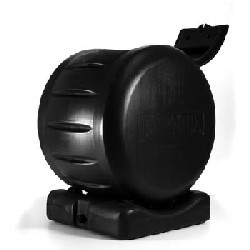
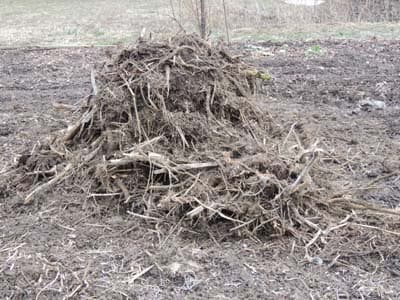
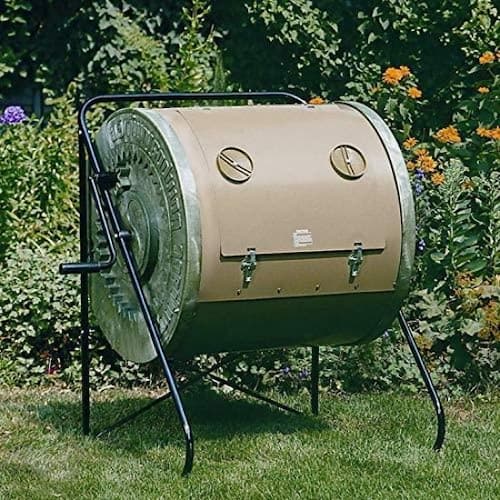
A commonly asked gardening question is “What can I compost?” This is really two questions. First, we want to know what to compost. Second, it is very important to know what not to compost. Listed below, are compostable materials you can put into your composter or garden compost pile. You just might be surprised at what qualifies for organic composting.
More and more gardeners and homeowners are composting. The resurgence of composting, is the result of four things:
The growing “go green” effort. More people are environmentally conscious.
Composting keeps valuable resources, like compostable kitchen scraps, out of the waste stream.
Save, and even to make $$$. Composting reduces or eliminates the need to buy fertilizers. Some people are even selling the compost they produce!
Are you concerned about the quality and safety of the food you eat? Composting is great for organic gardening. Gardeners know the healthy value of clean, organic compost.
The Right Mix
To turn kitchen scraps and other materials into compost, your composting project needs the proper mixture of “Browns” (also called Carbons), and “Greens” (items containing Nitrogen). Greens containing nitrogen, get the decomposition process started and keeps it going.
Use a Nitrogen to Carbon ratio of 4 to 1. In other words, use 4 parts of green materials for every part of brown materials. For the compost to decompose at a reasonable rate, there should be between 60% to 80% green materials. A higher amount of green materials can result in a gooey, messy, ammonia-smelling pile. Too little nitrogen and the compost will not decompose or will do so ever so slowly.
Tip: The more types of materials that you put into your compost mix, the wider the range of essential plant micro-nutrients in the finished product.
Now that you understand the importance of the right mix, let’s see what items are “Greens”, and what are “Browns”.
Brown Materials (Carbon)
Branches and twigs, chop finely for quicker decomposition
Dead, dried-up weeds
Dead flowers
Dead leaves. They are plentiful in the fall.
Newspaper (black and white, no colored paper or colored inks)
Sawdust
Shells from clams, lobsters, oysters, etc. Rinse them to remove excess salts. Then, crush them They are rich in calcium.
Straw or hay
Wood/fireplace ash – lots of potash, alkaline pH
Wood chips and wood shavings
Wooden Chopsticks
Old mulch – wood, cocoa shells, pine bark
Plant roots
Pine cones and needles – in small amounts, as they are acidic
Peanut shells – break down slowly.
Tip: Shred materials. This creates more surface area for bacteria to do its job and increases the rate of decomposition.
Green Materials (Nitrogen)
Coffee grounds (it’s okay to toss in the paper filter)
Egg shells, have plenty of calcium
Grass clippings, very high in nitrogen
Kitchen fruit scraps
Banana peels, orange peels
Stale bread
Pasta and sauce (not the meatballs)
Kitchen vegetable scraps
Leftover pizza – remove the pepperoni and sausage
Manures (not pet or human) in small amounts
Seaweed(wash off the salt, if taken from the ocean)
Weeds recently pulled and still green
What Else to Put into the Composter
Brown cardboard
Hair trimming, yes human hair
Paper plates and napkins – white
Brown paper bags
Paper Towels, but not if used to wipe chemicals, oil, grease, etc..
Paper towel and toilet paper cardboard inner spools.
Cardboard core of rolls of wrapping paper
Toothpicks
Vegetable oil- in small amounts
Kleenex
Tea bags
White, 100% cotton t-shirts (no colors, no synthetic materials)
Corks from wine bottles – will decompose very, very slowly.
Note: Fireplace ash does not need to be composted. It is already broken down. However, many people mix a little fireplace ash into raw or finished compost. The emphasis is on “a little”.
What Not to Compost
Knowing what “not to compost” is as important as knowing what to compost.
Avoid weeds with lots of seeds
Bones, unless finely crushed first.
Dairy products, except in very limited quantity
Dead animals
Fish
Meats
Poisonous plants like Poison Ivy, Poison Oak, or Poison Sumac.
Treated wood, contains toxins you do not want in your vegetable garden.
Walnut trees, any parts of this tree. It contains “jugoline”, toxic to plants.
Colored print material/inks – They can contain toxic chemicals.
Colored papers
Plastics – Do not toss in plastic bags, saran wrap, etc. into the composter.
Cooking fats, except small amounts of vegetable oil.
Did You Know? Depending upon what you put into your composter, finished compost may not be pH neutral. Test the soil from time to time. See: Compost pH and More on pH levels