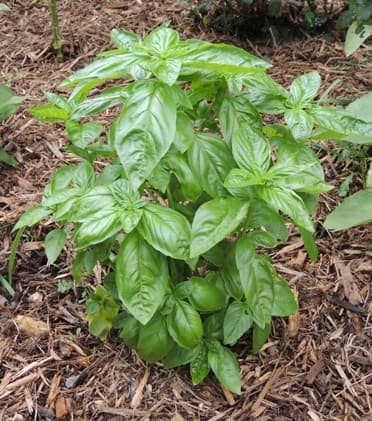
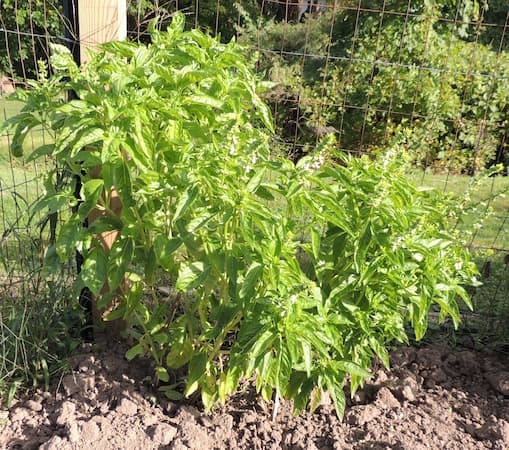
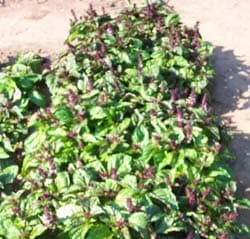
Basil herbs are among the most popular plants to grow in the home herb garden. Basil plants are about as easy to grow, as any plant can be. The plant is attractive, with many varieties to choose from. Among them, are varieties stealing a bit of flavor from anise, cinnamon, lemon, and even licorice. There are spicy varieties and sweet ones, too. Take your pick, but make sure to include at least one or two varieties of this popular herb in your garden.
This bushy plant grows 10-12 inches tall, with tooth-edged leaves. The leaves are varying shades of green to dark green, depending upon variety. Fragrant, purplish-white flowers grow on tall spikes. These attractive flowers, popular with bees, are sometimes used in bouquets.
In the kitchen, the many varieties of Basil find their way into a huge number of recipes around the world. None are more popular though than the many Italian recipes.
Basil grows well in herb gardens, flower gardens, containers, and pots. They make a good indoor plant in a sunny window. Try growing them indoors over the winter.
How to Grow Basil - There's Varieties A'Plenty
There are many varieties of Basil. As a matter of fact, there are over 150 varieties. Some of the more popular varieties include Spicy Globe, Cinnamon, Dark Opal, Greek, Genovese (Italian type), Lemon, Lettuce Leaf, Sweet Basil (the most popular), Purple, Siam Queen, and more!
Medicinal Benefits and Applications
Basil is known for its anti-oxidant properties. It helps to fight off heart disease and cancer. Its antibacterial properties help promote stomach health.
Nutritional Value
100 grams of Basil leaves contain approximately:
23 calories
2.7 g carbs
0 cholesterol
0.6 g fat
1.6 g fiber
3.2 g protein
4 mg sodium
Basil Plant Growing Specifications
Days to Harvest: 60 to 70 days, depending upon variety and growing conditions.
Plant Type: Grown as an annual in most areas. However, it can be grown as a perennial in frost-free areas of the country.
Deer Resistant? Yes. Deer, rabbits, and other pests do not like the strong scent and taste.
Native To: Tropical regions of Asia and Africa.
Botanical Name:Ocimum Basilicum
How to Grow Basil - Plant Propagation
Basil is grown from seed. It is popular to start seeds indoors in containers first. Started early and placed in a sunny window, many lucky gardeners will be using the leaves before the outdoor planting season has even begun! Transplant the seedlings outdoors after there are at least 4-six leaves, and after all danger of frost has passed.
Also, Basil seeds can be directly sown into your garden after all danger of frost.
Days to Germination: 5 to 10 days.
Space seedlings or thin plants to 10″ apart, in rows two feet apart. Some gardeners will grow just a few plants in clumps. They will tolerate a little crowding.
How to Grow Basil Herb Plants
Planting and Soil Needs
Basil is an attractive, warm-weather plant. It is very easy to grow. They prefer full sun. They do well in average soils and tolerate dry soil conditions.
For optimal growth, mix compost into the soil at planting time. And, add some general-purpose fertilizer into the soil, too.
Basil is not a hardy plant. Consequentially, they will succumb to the first fall frost. Thus, plant it outdoors after the last frost date in your area. And, be prepared to protect the plant from an early Fall frost.
While it is grown as an annual in most areas, it can be grown as a perennial in frost-free regions. In that case, plant them where they will be undisturbed.
Light Requirements
Basil plants thrive in full sunlight. Grow it in a location where it will receive at least seven to eight hours of bright, direct sun. For optimal plant growth, select a planting location where it will receive full sun from sunrise to sunset.
In hotter regions, the afternoon sun will occasionally scald a few of the leaves. But, this is generally not a major problem.
The plants tolerate light, partial shade, and are adaptable to growing indoors in a sunny window.
Fertilizer Needs
Apply a general-purpose fertilizer once a month during the growing season. A fertilizer high in nitrogen to promote lush, green leaves works well, too.
Water Needs
Basil plants need plenty of water to fuel the growth of the leaves. So, keep the soil moist, but not wet during the entire growing season.
As the season progresses, the roots grow deeper into the soil in search of moisture. As a result, it is important to water more deeply later in the year.
Other Steps
Weeds rob valuable water and soil nutrients. Therefore, keep young Basil plants well-weeded. Then, after they have grown several inches, apply a layer of mulch. This helps to retain soil moisture and gives the plant a neat and tidy appearance.
Annual Basil plants are killed by frost or a freeze. Therefore, cover up spring seedlings if unusually cold weather is forecasted. Be prepared to cover up the plants in the Fall, to protect them from frost and extend the season a little while longer.
As plants get big, pinch the growing tips for bushier growth.
Importantly, when flowers develop, the leaves turn bitter. Thus, pinch off flower buds as soon as you spot them.
The best-tasting, most flavorful leaves come from young, vibrant plants. We recommend starting a second crop during mid-summer.
Basil makes good houseplants. As fall arrives, take young plants and transplant them into a decorative indoor houseplant pot or container. Gradually adjust them to lower and lesser light levels to minimize leaf drop. Of course, you can also start new plants indoors from seed.
Insects, Pests, and Plant Disease
Insect problems are usually minor. Aphids can be an occasional problem. Treat the plant with an organic soap spray. Slugs and snails sometimes attack the leaves. Use garden-safe slug and snail pellets.
Deer, rabbits, and other foraging animals do not bother Basil plants. They do not like the strong scent and taste.
Plant disease is uncommon. However, powdery mildew can occur in wet and humid weather. Do not use fungicides on this herb. Rather, be diligent to remove diseased leaves and plants, as you spot this problem.
How to Grow Basil Plants in Containers
Basil Plants are great candidates to grow in containers on your patio or deck. You can also grow them in window boxes.
In addition to the “How to Grow Basil” steps above, here are a few additional steps for growing them in containers:
These herbs tolerate a little overcrowding. So, grow them in containers a little closer than the normal recommended spacing.
Select a sunny location on your patio or deck.
Deck and patios often get hotter than in your herb garden. Hence, in hotter weather, you can move the planter into shade in the afternoon.
It is important to have a drain hole in the container to allow excess water to drain from the pot.
The plant grows best in evenly moist soil. Keep an eye on the moisture level. Check the plants every few days, especially in extended periods of hot, dry weather.
When watering the plants, thoroughly wet the soil. Excess water will drain through the hole in the bottom of the flowerpot.
Nutrients in a container are limited. So, use fertilizer spikes to feed the plants. Or, apply a light solution of liquid fertilizer once a month.
How to Grow Basil - Harvesting Leaves
While it takes 60 days or more to have a sufficient number of leaves for a major harvest, you can take a few leaves much sooner. After a few weeks of growth, you can begin to harvest the leaves as long as you leave at least six or more sets of leaves on the plant. Harvest leaves and stems as soon as there are enough to use in your favorite basil recipe. Rinse the leaves well before using them.
Basil leaves can be used fresh. Or, you can preserve them for later use by freezing or drying them.
You can dry the leaves in three ways:
Air-dry them in a cool, well-ventilated area.
Dry them in the oven at 170° F.
Use a dehydrator.
Make certain the leaves are completely dry prior to storing them. Store dried leaves in an air-tight container. And keep the container out of direct sunlight.
How to Grow Basil - Culinary Uses
Basil shines in kitchens around the world. From Thailand to the Mediterranean to the United States, there is no shortage of recipes.
Basil is a standard in pizzas, spaghetti sauces, and pestos. It adds flavor to spaghetti sauce, cheeses, soups omelets, and salads. It is also used fresh for sliced tomatoes, as a garnish, or for flavoring meats, and cooked in stir-fries.
Related Articles
Also, people who liked this article, will also like: