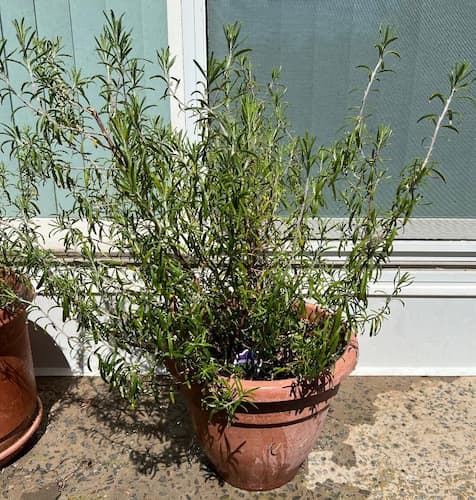
Looking for another rewarding plant to add to your herb garden!? Try growing Rosemary paltns. With thin, dark green leaves and pale blue flowers, Rosemary herbs are a popular and attractive herb. It is an evergreen shrub. Rosemary plants are members of the mint family. They grow wild in the Mediterranean region. It is a perennial in warm areas. It is susceptible to frost and therefore, is grown as an annual in many parts of the country.
Young plants can be grown like houseplants until they get big. Then, move them outside to their permanent summer home. They will look and grow well in your garden, or along the house. Also, try growing Rosemary in big containers on your deck.
Did You Know? Rosemary plants are good companions with plants from the cabbage family. It protects them from pests. More on Companion Plants
Medicinal and Culinary Uses
Medicinal Uses:
Rosemary herb has been used to treat both stomach aches and headaches. It can help to ease gastro-esophageal reflux disease.
It is also believed to aid in memory retention. I’m personally going to give this a try. Now, if I can only remember where I stored my Rosemary……
The oil of Rosemary is used in perfumes and cosmetics. It has also been used as a moth repellent.
Culinary Uses:
The leaves are used fresh, dried, or frozen in many recipes. It commonly is used on meats (beef, chicken, ribs), stews, sauces, and soups.
Brew some fresh Rosemary in tea, adding a few fresh or dried leaves.
Plant Type: Perennial. The plant normally lives 10 to 15 years or more.
Number of Varieties: Dozens.
Deer Resistant? Yes. Dere and other foraging animals do not like the plant’s strong scent and bitter taste.
Native To: The Mediterranean.
Botanical Name:Rosemarinus Officinalis
Rosemary Plant Propagation
Rosemary bushes are started from seed. The seed is hard to start. Soak Rosemary seeds in water a few hours before planting. We recommend starting them indoors, as they take a long time to sprout. Start seed indoors six weeks before the last frost.
Note: For indoor starts, we recommend using a heated germination mat, to increase the speed of germination. And, it, results in a higher germination rate.
If you want to grow and enjoy them as houseplants, start them indoors even earlier. After they sprout, place them in a warm, sunny window.
When transplanting outdoors, space plants three feet or more apart. In warm areas where there is no frost or freeze, pick a place where the plant can grow for many years.
Seed Planting Depth: The seeds need light to germinate. Sow Rosemary seeds 1/8″ deep or less. Or, sow them on top of loose soil and lightly water them in.
Ideal Soil Germination Temperature: 65 to 70° F.
Final Plant Spacing: 2 to 3 feet apart.
Days to Germination: 15 – 25 days.
How to Grow Rosemary Plants
Planting and Soil Needs
Growing Rosemary plants is very easy. Select an area of your garden where these long-lived perennials can grow undisturbed for many years. They require full sun and do not tolerate shade. They will do well in almost any loose, well-draining soil. The plants tolerate dry soil conditions and drought.
For a good start, mix compost into the planting site. Also, mix in a fertilizer high in nitrogen to give the plants an early boost.
Light Requirement
Rosemary plants are sun-lovers. Consequently, select a location in your garden where they will receive at least seven to eight hours of bright, direct sun. For optimal growth and flavor, grow them in a location that receives full sunlight from sunrise to sunset.
The plants do not tolerate shade.
Fertilizer Needs
Rosemary plants are not big feeders. Rather, they grow best in average soil with little or no extra fertilizer. Give them a high-nitrogen fertilizer once at the start of the season to promote quick growth. Then, do not add fertilizer to this plant because too much fertilizer weakens the flavor.
If the soil is poor, then add a little balanced, general-purpose fertilizer once or twice during the season.
Water Needs
Rosemary plants do not require water during most times of the year. But add water if they appear to wilt during extended periods of drought.
Water the plants deeply at the roots. Then, allow the soil to dry out between watering.
Other Steps
Weeds rob valuable water and soil nutrients. Therefore, keep young Rosemary plants well-weeded. Then, after they have grown several inches, apply a layer of mulch. This helps to retain soil moisture and gives the plant a neat and tidy appearance.
Pinch back the growing tips of the plant to promote bushier growth.
Prune away dead, damaged, or diseased leaves or stems. Once your Rosemary shrub reaches a couple of feet, don’t hesitate to bring out the shears and shape them. Be creative if you dare! At the end of the season, cut the plants back by 1/3 to 1/2.
If you are growing Rosemary in containers, you can over-winter plants in a greenhouse in some areas.
Harvest leaves and use fresh, as needed, in the summer. Use sharp pruning shears to cut off 4-to-6-inch sprigs. As autumn arrives, harvest them in the morning when the oils are at their peak. Spread leaves out to dry in a cool, well-ventilated area. Or, hang stems upside down to dry in a cool, well-ventilated area. After the leaves are dry, remove them from the stems. Finally, store them in an air-tight container out of direct sunlight.
Or, pick and freeze immediately.
Overwintering Rosemary Plants
The plant thrives in warm weather. To grow them in colder regions of the country, select varieties that are more cold-hardy. Then, bring them into a greenhouse or cool garage during the winter months. Of course, you can grow the plants indoors during the winter, too. Place the plant in a sunny southerly window.
In areas that have frosts and light freezes, first prune back about 1/3 of the plant. Second, apply a layer of mulch around cold-hardy varieties. After that, use of a light burlap sack will also help the plant to survive cold weather.
Related Articles
Additionally, people who liked this article about “How to Grow Rosemary Herbs” will also like: