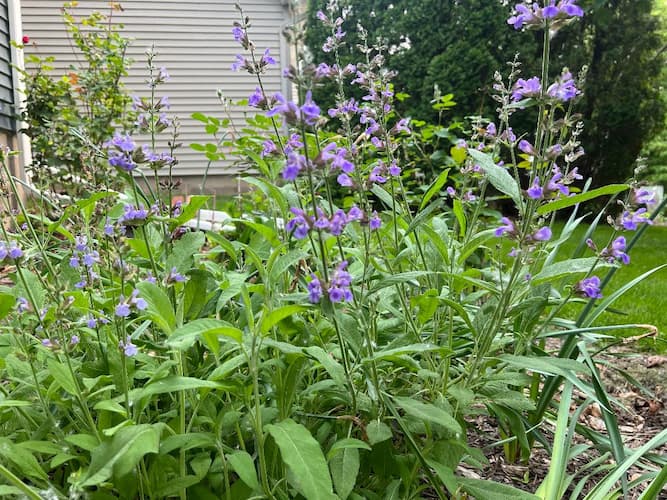
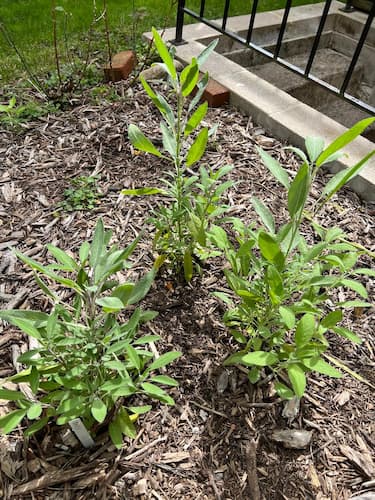
Common Sage, or Garden sage plants, can be found growing wild in the Mediterranean region. There are over 750 species grown all over the world. Like many herbs, it is also considered a flower. This herb grows as a shrub. Sage herb has a strong odor and is bitter tasting. It is commonly used in cooking.
The small bushes usually grow up to three feet high, with grey-green leaves. The leaves have a pebbled texture. Flowers have circular clusters.
Culinary Uses
Medicinal Uses:
Sage has many medicinal benefits, including:
Fights bacterial
Treats eye problems and infections
Memory loss
Treatment for epilepsy
Treatment for worms and other intestinal problems.
Culinary Uses:
The leaves and stems of this herb, are used in cooking for flavoring sausages, pork, sauces, cheese, dressings, and stuffing. Grandma probably uses sage in Thanksgiving turkey stuffing. Also, Sage leaves are brewed for tea.
Other uses:
It is an aphrodisiac.
In the 1800s, Americans used it to whiten teeth.
Nutritional Value
100 grams of dried, ground Sage contains approximately:
315 calories
60.7 g carbs
0 cholesterol
7.0 g fat
40.3 g fiber
10.6 g protein
11 mg sodium
Sage Herb Plant Growing Specifications
Flowers Bloom: Late Spring to Summer before the flowers bloom.
Flower Colors: Pink, purple, red, violet, red.
Days to Harvest: Late spring to summer.
Plant Height: Most varieties grow two to three feet tall. A few varieties can grow up to four feet high or more.
Ideal Growing Temperature Range: Daytime: 60 to 70° F.
Plant Type: Perennial. The plant normally lives 3 to 5 years or more.
Number of Varieties: It is one of over 900 varieties of Salvia.
Deer Resistant? Yes.
Native To: The Mediterranean.
Botanical Name:Salvia Officinalis
Sage Plant Propagation
Sage plants are grown from seed. Directly sow seeds into your garden or started indoors for transplanting later. Start sage seeds indoors, six weeks before the last frost. If planting outdoors, sow seeds after the soil has begun to warm in the spring.
Sow sage seeds early in the season, and cover lightly with soil.
Note: For indoor transplants, we recommend a heated germination mat, to increase the speed of seed germination. Also, the germination rate is higher.
Seed Planting Depth: The seeds need light to germinate. Sow Sage seeds 1/8″ deep or less. Or, sow them on top of loose soil and lightly water them in.
Ideal Soil Germination Temperature: 65 to 75° F.
Final Plant Spacing: Space seedlings, or thin plants 18 to 24 inches apart.
Days to Germination: 7 – 21 days.
How to Grow Sage Herb Plants
Planting and Soil Needs
Growing hardy Sage plants is very easy. Select an area of your garden where these perennials can grow undisturbed and come back each Spring for many years. The plants require full sun. They will do well in almost any loose, well-draining soil. The plants tolerate dry soil conditions and drought. We recommend growing them on sightly evaluated soil because wet soil causes root rot.
Help the plants get off to a good start by mixing compost into the planting site. Also, add in a fertilizer high in nitrogen to give the plants a quick boost.
Light Requirement
Sage plants are sun-lovers. Consequently, select a location in your garden where they will receive at least seven to eight hours of bright, direct sun. For optimal growth and flavor, grow them in a location that receives full sunlight from sunrise to sunset.
In hotter areas of the country, Sage plants benefit from a little light shade to protect the leaves from scalding in the rays of the hot sun. However, too little sunlight results in leggy plants, less vigorous plants, and pale leaves with less oil content.
Fertilizer Needs
Sage plants are not big feeders. Rather, they grow best in average soil with little or no extra fertilizer. Give them a high-nitrogen fertilizer once at the start of the season to promote quick growth. Then, do not add fertilizer to this plant because too much fertilizer weakens the flavor.
If the soil is poor, then add a little balanced, general-purpose fertilizer once or twice during the season.
Water Needs
Sage plants do not require water during most times of the year. But add water if they appear to wilt during extended periods of drought.
Water the plants deeply at the roots. Then, allow the soil to dry out between watering.
Other Steps
Weeds rob valuable water and soil nutrients. Therefore, keep young Sage plants well-weeded. Then, after they have grown several inches, apply a layer of mulch. This helps to retain soil moisture and gives the plant a neat and tidy appearance.
Pinch back the growing tips of the plant to promote bushier growth.
Prune away dead, damaged, or diseased leaves or stems. Once the plants reach several inches tall, don’t hesitate to bring out the shears and shape them. At the end of the season, cut the plants back by 1/3 to 1/2.
If you are growing Sage in containers, you can over-winter plants in a greenhouse in some areas.
Insects, Pests, and Plant Disease
Insect and disease problems are uncommon. However, they do sometimes occur.
Aphids, fruit flies, mealy bugs, spider mites, and whiteflies are an occasional problem. Treat the plant with an organic insecticidal soap if problems arise.
Foraging animals do not bother these herbs.
Sage herbs can suffer from downy and powdery mildew, as well as bacterial leaf spot, and root rot. Prune plants to improve air circulation. Use organic fungicides only if needed.
Root rot occurs in prolonged periods of wet or soggy soil.
Harvest leaves and use fresh, as needed, in the summer. Pick the leaves in the morning when their oils are the strongest. First, wait until the dew has dried off of the leaves. Use sharp pruning shears to cut off the leaves. As autumn arrives, harvest them in the morning when the oils are at their peak. Spread leaves out to dry in a cool, well-ventilated area. Or, hang stems upside down to dry in a cool, well-ventilated area. After the leaves are dry, remove them from the stems. Finally, store them in an air-tight container out of direct sunlight.
Or, pick and freeze immediately.
Cut back plants after blooming, to promote new growth.
Related Articles
Also, people who liked this article about “How to Grow Sage” will also like: