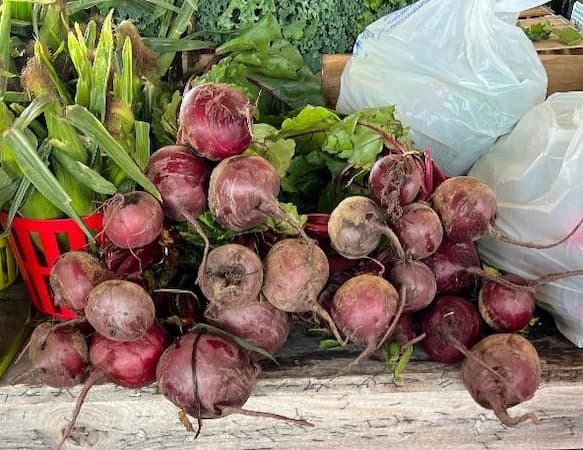
Do you like beets? Okay, so beets may not be the most popular vegetable on the planet. But those who like beets, really love them. Home gardeners quickly discover that beet plants are easy to grow. Big, bulbous beetroots reach maturity quickly and take up little space. Learn how to grow beets with this garden guide.
Almost all varieties of beets are a deep rich red. There is one white variety on the market. Beets are commonly known to bleed, or leak, their deep red juices. This juice can cause stains. Thus, be careful where you set them.
Did you know? Beets are one of eight vegetables that makes V8 taste so great.
Beets Plant Specifications
Day to Harvest: Harvest roots 50 to 70 days after planting the seeds. Leaves can be harvested as soon as they reach a size large enough to pick.
Plant height: One to three feet tall, depending upon variety.
Light Needs: Full to partial sunlight.
Ideal Soil pH: 6.0 – 7.0
Plant Hardiness Zones: 2 – 11
Deer Resistant? No. Deer will eat the leafy greens.
Plant Type: Biennial, but usually grown as an annual.
Native To: Europe.
Botanical Name:Beta vulgaris
Other Names: Beetroot
Nutrition Facts
Like most other vegetables, beets are good for your health.
1 cup of raw beets contains approximately:
58 calories
13 g carbs
0 cholesterol
0.2 g fat
3.8 fiber
2.2 g protein
Variety of Beets
There are several varieties of beet plants. Most are round in shape, with deep red color.
A few varieties are deep red and cylindrical, making them easier to cut uniform slices.
There is also an uncommon white beet.
How to Grow Beets
Plant Beet seeds thinly, 1/2 inch deep. After germination, thin to 2 to 3 inches apart. Rows should be spaced 1 1/2 feet apart.
Apply a general-purpose fertilizer while sowing, and again two to three weeks later. Beets should be kept weed-free. It is easy for weeds to overshadow the shorter beet leaves.
Do not overcrowd beets. Overcrowding will affect the development of the beet root, causing it to grow deeper and slender, rather than forming a big round bulb.
Days to Maturity: Approximately 55 to 60 days to harvest for most varieties.
Tip: Keep the soil lightly watered. Too little water will result in a tough and leathery crop.
How to Grow Beets - Insects, Pests, and Plant Disease
Aphids and beetles will occasionally infest the plants. Treatment with insecticide is effective.
Mice and squirrels and a few other pests will sometimes nibble on your beet crop.
Mildew and leaf spots are an occasional problem. Treat with fungicides.
Harvesting Beets
Begin to harvest beets when they are two inches in diameter, thinning the row as you go. Beets are tender when young. A big, round beet bulb may look really impressive, but will certainly not taste impressive. Actually, large roots are tough and grainy.
Beet leaves are edible. They are loaded with healthy minerals and vitamins. Begin to pick the leaves as soon as they are big enough to use in salads and other recipes. However, if you want to harvest the bulbs, don’t pick too many leaves from one plant. Instead, pick a few leaves from each plant. from each plant.
Plant Hardiness
Beets are sensitive to frost. But, they are a root crop. Should Jack Frost pay an unexpected visit, the leaves will be inedible. However, the beets under the ground are still harvestable.