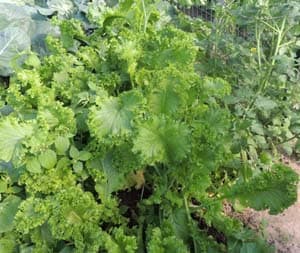
Mustard is known as the “King of the Condiments”. In addition to the seeds, which are used to make the mustard for our hot dogs, the mustard greens are also edible. People have been using these greens to spice up their food for thousands of years. So, why not join the group of happy gardeners who know how to grow mustard greens? Go out and purchase a packet of mustard seeds today and get growing!
Home gardeners love this easy, fast-growing, cool weather crop. As you would expect, the leaves have a sharp, spicy taste. The leaves are great raw, in salads, or as cooked greens. They are nutritious, and healthy for you and your family. Mustard seeds are harvested to make the condiment that you use on hotdogs, sandwiches, and more.
Mustard seeds and leaves are good for your health. It’s rich in protein and low in calories and carbs. Yet it is high in vitamins A and C, and B-Complex vitamins. It contains calcium and iron, too.
The list of medicinal benefits is long. It has cancer-fighting beta carotene, antioxidants. It is good for heart health and diabetes control. In addition, mustard is used for relieving muscle pains and spasms, ringworm, and can relieve respiratory problems. What is more, it fights bad breath and promotes hair growth, too
Nutritional Value
Item:
Calories
Carbs
Cholesterol
Fat
Fiber
Protein
Sodium (mg)
Greens, 1 cup shredded
15
3
0
0.2
1.8
1.6
11
Seeds, 1 Tbsp.
32
2
0
2
1
2
1
Mustard Plant Specifications
Days to Harvest: Harvest leaves in 30 to 45 days. Then, harvest mustard seeds in 80 to 120 days.
Native to: Eurasia, the Middle East, and Northern Africa.
Botanical Name:Brassica
Light Requirements
Mustard plants grow best when planted in a location where they receive at least six to eight hours or more of direct sunlight. They benefit from a little partial shade during the hot midday period.
This is a cool-weather plant. In warm areas of the county, grow them in partial shade. While this is not optimum for plant production, it helps to avid wilting, bolting and sun scald.
Planting Mustard Seeds
Sow mustard seeds 1/4 to 1/3 inch deep, and 3″ apart. Thin seedlings to 5″ – 9″ apart. Separate the rows, 1 foot apart.
Sow seeds early in the spring and a second crop in the early fall. They prefer cool weather, so leave the middle of the summer for the heat loving vegetables.
Keep the soil moist during the germination period.
Days to Germination: 4 – 7 days.
How to Grow Mustard Plants
Growing mustard plants is easy. The plants grow well in most good garden soils.
The plants prefer full sun and cool weather. Grow crops spring and fall. The plants will bolt in hot weather.
Planting successive small crops, separated about a week apart, results in a continuous supply of greens.
Mustard plants should be grown quickly. Use plenty of water, and ample amounts of fertilizer, to promote the fast growth of tender, green leaves. Water plants during dry periods.
Keep the plants well weeded, so weeds rob the plants of water and nutrients. It makes harvesting easier, too.
We recommend organic pesticides for use on Mustard plants and other greens.
Plant Disease
Mildews can affect the plant. Promote fast-growing, healthy plants, so they will be less susceptible to disease. Allow proper spacing to increase air circulation. Avoid watering towards evening.
How to Grow Mustard - Harvest Time
Days to Harvest: Leaves can be harvested in 30 to days. Seeds take much more time, appearing when the plants “bolt”.
Mustard greens are eaten raw or cooked. Harvest leaves while young and tender. Pick individual leave or the entire plant. Leaves get tough and have a strong flavor during hot, dry weather.
Mustard seeds should be harvested when the plants begin to yellow. You want to leave them on the plants as long as possible, but before the pods burst open and spill their seeds.
Plant Hardiness
Plants grow best in cool weather.
Mustard plants will tolerate a mild frost. But, they will succumb to a hard freeze. If the plants are still productive, cover them up when frost or freeze is in the forecast.