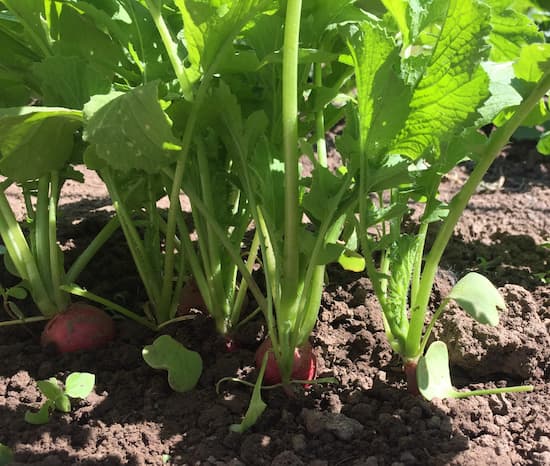
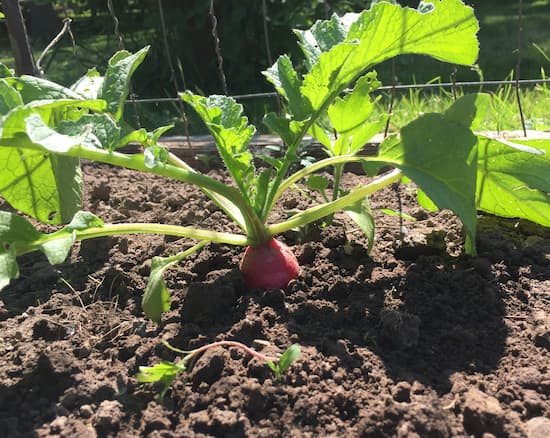
Without a doubt, every gardener has room to grow a few radish plants. Radishes take up very little space. And, this fast-growing plant can be grown between the rows of other plants. You can also grow a few in containers on your patio or deck. Plant a few radish seeds in a container and see for yourself. This guide on “How to Grow Radishes” will help you to grow the best radishes you’ve ever seen.
Radishes spice up salads and vegetable trays. Their color adds appeal to many dishes and makes them a very desirable garnish. Their sharp, zippy taste livens up salads and is great with dips and dressings. Radishes are fast and easy to grow. In addition, they take up little space in your garden. As a result, it is very popular in the backyard garden.
Garden Tip: Radish seeds germinate in a matter of days. Many gardeners use radish seeds as row markers. Sow a few seeds amongst rows of carrots and other vegetables that take a long period to germinate. This “marks” the rows. As the carrot crop begins to grow, you can either pull and discard the radish, or pull and eat them (We much prefer the latter!).
Even though many kids do not like them, they are a great crop. They are easy to grow, and one of the fastest to harvest all vegetables. With a harvest in as little as twenty days, gardeners are quickly rewarded for their efforts.
Radishes are native to China, India, and Central Asia, where they have been in use for thousands of years.
Did You Know? Small, round radishes do not do well in hot weather. Elongated “winter” radishes tolerate heat better.
Varieties of Radishes
There are a wide variety of radishes.
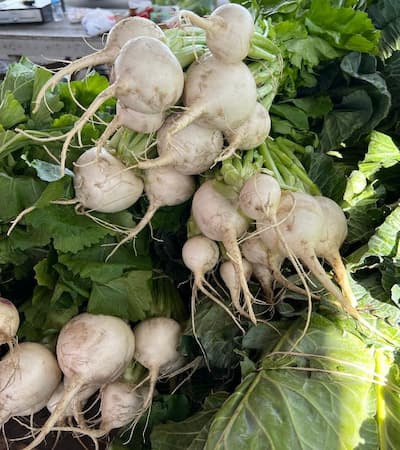
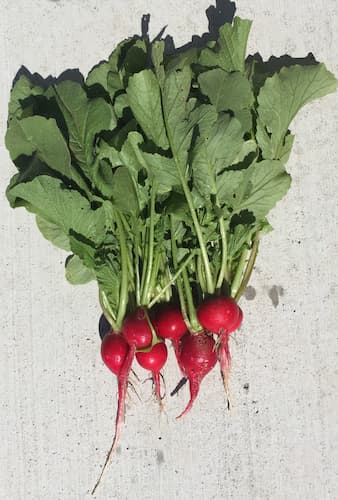
The colors are red, pink, and white and a combination of red and white.
There are round varieties and long, cylindrical ones, too.
While the most popular varieties are round, the French varieties are cylindrical, resembling a small carrot, but less tapered at the tip.
Planting Radish Seeds
Sow radish seeds no more than 1/2 inch deep. Space seeds 1 1/2 to 2 inches apart. Separate rows eight to ten inches apart. We recommend double rows, with wider rows between the double rows to afford easy access.
Tip: Broadcast spreading is also common, and easy to do. Prepare a square or rectangular area and spread the seed out across the entire area. Then, lightly sprinkle loose soil over the area.
The small seeds are hard to properly space. As soon as they are big enough to thin out, thin seedlings to 1 1/2 to 2 inches apart in all directions. The plants do not like to be crowded. They will not form a bulb if overcrowded by other radishes or weeds. Weeding is very important to proper bulb growth. Most growers don’t give much thought to weeding, because of their quick growth. But, it is important for proper bulb development.
Radishes are a great candidate for succession planting. Plant small rows at about two-week intervals. They do not grow well in hot, dry weather. As hot summer weather arrives, stop growing them. Resume succession planting as the weather begins to cool towards fall. Note, you may want to skip the mid-summer weeks, as radishes will not perform well in high heat. Like many other vegetables, they tend to bolt in hot weather. More on succession planting.
Don’t forget to plant a fall crop. With the short number of days to maturity, it can be one of the last vegetables to harvest in your fall garden.
How to Grow Radishes
Growing radishes is super easy.
They grow will grow well in average soils. Like other vegetables, they will respond to rich, well-drained soil. While preparing your garden space, work the soil six inches or more if you are growing the long, cylindrical varieties. Add fertilizer while working the soil. Make sure to remove rocks and stones.
The plants do not like crowding. Overcrowded radish plants may fail to form a bulb. As soon as they are big enough to thin out, space them 1 to 2 inches apart.
Keep rows weeded, especially in the first week or two.
Make sure to provide ample water.
Tip: Radishes will sometimes bolt or fail to form a bulb. The most common causes of this are crowding and insufficient amounts of water.
Harvest radishes when bulbs are young. Larger bulbs become tough and woody.
Sucking and chewing insects can sometimes infest the leaves, but not overall growth of the radish.
Root maggots can enter the roots, destroying the crop. If this occurs, plant future crops in a different location.
Plant Disease
Few diseases affect the plant or roots during their short growth cycle. Root maggots can be an occasional pest.
Harvesting Radishes
Days to Maturity: Most varieties are ready to harvest in little as 30 to 35 days. There is one variety that requires just 20-25 days! Note, some cylindrical varieties may require a little longer to grow.
Harvest them when they are 1 to 1 1/2 inches in diameter. Large bulbs become tough and woody. And, they lose their taste.
Plant Hardiness
While radishes thrive in cooler weather, they do not take a liking to frost. You can plant seeds just before the last frost date. If frost warnings are posted, cover them up at night.