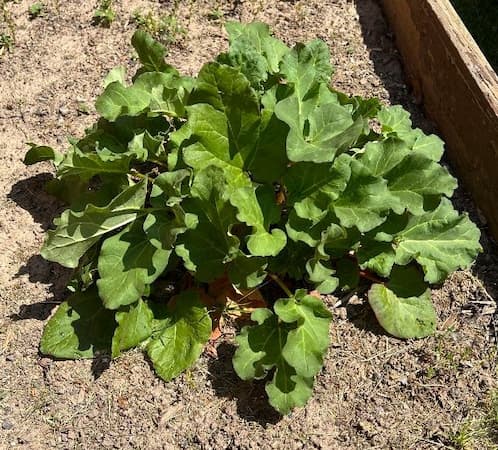
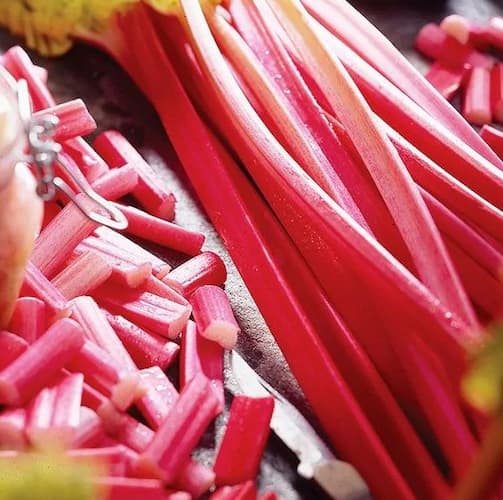
Rhubarb plants are an easy-to-grow perennial, that is just beginning to be re-discovered. Native to Asia, Rhubarb was popular in grandma’s garden. It’s easy to grow and is one of the earliest producers in the vegetable garden. Plant a few rhubarb crowns in the ground where they won’t be disturbed, and the plants will produce for many years. It will certainly reward you with an almost effortless production of stalks to enjoy.
Rhubarb is also called the “pie plant”, as it is most popular cooked in pies. The plant has a long, thick, edible stem with good flavor, but a tart taste. Rhubarb recipes almost always call for extra sugar to sweeten it.
Through the years, the debate has raged as to whether Rhubarb is a vegetable or a fruit. It is commonly thought of as a fruit, as this is the way it is used. In actuality, it is actually a vegetable.
Important: Rhubarb leaves are poisonous. Cut the stalk at the base of the leaf and discard the leaves.
Varieties:
There are two types of Rhubarb. The most common has a reddish stalk, while the second has a white stalk with light pinkish coloring and streaking. Their taste is the same. We suggest you grow a few of each for color.
Did You Know? Rhubarb is one of just two perennial vegetables, that lives for several years. The other is Asparagus.
Garden Tip: Do not confuse Rhubarb with “Rhubarb Swiss Chard“. They are not the same.
Nutritional Value
One cup of raw, shredded Rhubarb contains approximately:
175 calories
42 g carbs
0 cholesterol
0.5 g fat
3.8 g fiber
1.9 g protein
10 mg sodium
Note: In addition to containing no cholesterol, consumption of Rhubarb helps to lower your cholesterol levels.
Toxicity: While the stalks are edible, the leaves are toxic to humans, pets, and wildlife.
Plant Type: Perennial
Deer Resistant? Yes.
Native To: Asia.
Botanical Name:Rheum rhabarbarum
Rhubarb Plant Propagation
While rhubarb can be propagated from seeds, rhubarb crowns (or roots) are used. Take a piece of root with at least one bud and plant it with the rhubarb crown just at soil level. Plant outdoors as soon as the soil can be worked. The plant is hardy and will survive late spring frosts. The leaves and stalk are sometimes damaged by an unexpected frost or freeze. However, new growth will soon appear.
Space roots two to three feet apart. They will spread and fill in open spaces. The plants tolerate a little crowding, but the stalks and leaves will grow bigger and healthier if you allow them plenty of space. A few plants are all you will need for a home garden. If you are planting large quantities, space rows three feet apart.
How to Grow Rhubarb Plants
Before planting, select a location where they will not be disturbed for years, and where they will not be in the way when tilling your garden in future years.
Plant Rhubarb crowns in full sun. However, the plants tolerate partial shade.
Being easy to grow, it thrives in most garden soils. However, we recommend using fertilizers and compost for faster, healthier growth. Use a general-purpose fertilizer, or a high nitrogen mixture, for well-established plants, to promote leaf and stalk growth.
Make sure ample water is in the soil during the harvest period. Then after harvest, don’t forget to provide water, to keep your plants healthy all year long. As a rule of thumb, when watering the rest of your garden, water your rhubarb plants, too.
Healthy plants will grow and spread. Separate or thin the plants every five years, or sooner if the plants become crowded.
Insect infestations are fairly uncommon. For occasional infestations, use an insecticidal soap or mild insecticide.
Plant Disease
Rhubarb plants are long-lived and suffer few diseases. On occasion, fungus and crown rot can occur. Fungus problems are more common in wet and humid weather if the plants are crowded.
Plant Problems – Diagnosis, causes, and cures for many common plant problems.
How to Grow Rhubarb - Harvest Time
Days to Maturity: Begin picking Rhubarb in the spring as soon as the stalks are large enough to harvest in sufficient quantity for the recipe you are planning to use.
Newly planted Rhubarb will be ready to harvest the following year.
You can harvest the Rhubarb regardless of size. When harvesting, grasp a stalk firmly close to the ground. Twist and pull the stalk, and it should break free of the plant. While harvesting, pick the largest stalks first. Don’t let them get too big. Stalks remain sweet and flavorful until the warm summer weather begins. Then, the stalks turn bitter.
Did you know? Rhubarb plants can be forced into growing earlier. While the ground is still frozen or covered with snow, cover a couple of plants with a five-gallon bucket, preferably black. You can also use a thick layer of straw or leaf mulch. The plants will begin growing earlier, and you can harvest them days or weeks before your neighbors!
Plant Hardiness
Rhubarb plants are as hardy as vegetables come. They begin to grow as soon as the ground begins to thaw. No matter hold cold it gets in late spring, the weather will not kill the plant, although in some cases it may damage the first leaves.
The plants will die back in the fall. In harsh northern climates mulch with a layer of straw or dead leaves to protect rhubarb crowns from damage by extreme cold.